












































































































































10 Practical Ways to Stop Overeating and Build Healthier Eating Habits
Author: RVLNSV PRASAD
Updated: August 2026
[About Us]
[Author Bio]
[Editorial Policy]
[Contact Us]
Quick Answer
If you want to stop overeating, focus on understanding why you eat rather than simply trying to eat less. Eating slowly, reducing distractions, planning meals, noticing hunger and fullness cues, managing emotional triggers, and creating a supportive food environment can all help.
Occasional overeating is common. It becomes more important to seek professional guidance when eating feels repeatedly out of control or causes significant distress. Cleveland Clinic distinguishes ordinary overeating from Eating too much disorder and recommends professional support when the problem begins to affect daily life.
Introduction
Overeating can happen to almost anyone.
At a celebration, it’s easy to eat more than you intended. Watching television can also lead to continued snacking without realizing how much you have eaten. Stress, boredom, tiredness, or simply being surrounded by tempting foods may also encourage you to reach for snacks.
The problem is not always hunger.
Sometimes the situation around eating matters just as much as the food itself.
I learned this from my own experience. During long periods of working from home, I often kept snacks close to my desk. I would take one bite while working, then another. Eventually, I could finish a packet without really noticing how much I had eaten.
The important lesson was not that I needed stricter food rules.
I needed more awareness.
I started paying attention to when I was eating, where I was eating, how quickly I was eating, and what I was feeling before reaching for food.
That changed the way I approached eating.
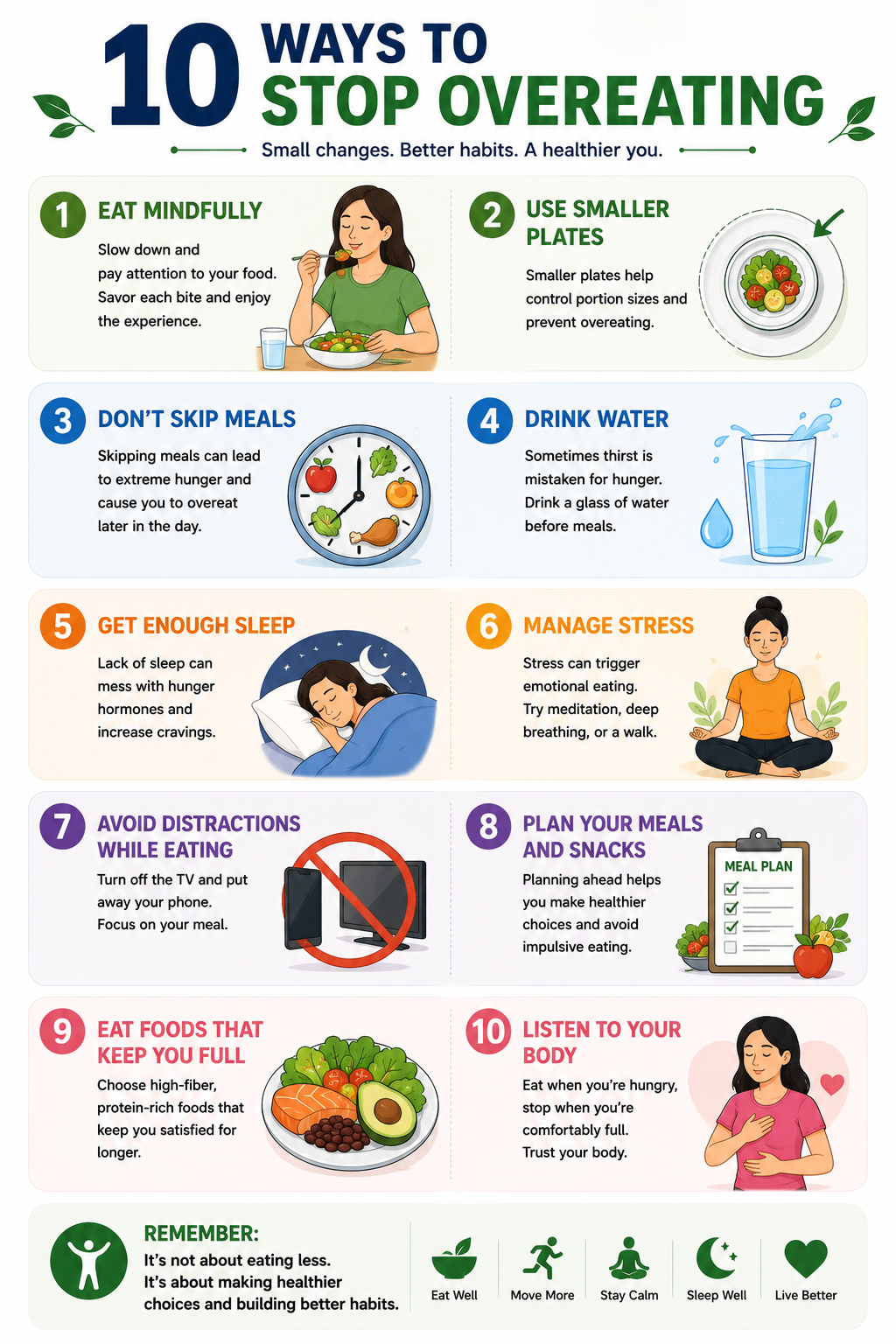
This article explains 10 practical ways to stop overeating without relying on extreme restriction. The suggestions focus on eating awareness, portions, routines, emotions, sleep, and your food environment.
Why Do People Overeat?
Overeating is not always caused by a lack of willpower.
Cleveland Clinic identifies several factors that can contribute, including emotional eating, large portions, eating quickly, social situations, distractions, certain medications, and some medical conditions.
Common triggers include:
- Eating quickly
- Large portions
- Eating while distracted
- Stress or boredom
- Social situations
- Long gaps between meals
- Poor sleep
- Easily available snack foods
- Habitual late-night eating
Understanding the trigger can be more useful than simply blaming yourself for eating too much.
1. Eat More Slowly
Eating slowly gives you more time to notice how the meal feels and whether you are becoming satisfied.
When meals are rushed, it can be easier to continue eating before your body has had enough time to register fullness. NIDDK recommends eating slowly and notes that the brain may need at least 15 minutes to recognize that the stomach is full.
Try this simple approach:
- Take smaller bites.
- Chew thoroughly.
- Put your fork or spoon down occasionally.
- Notice the taste and texture of the food.
- Pause before automatically taking another serving.
You do not need to make every meal unusually long.
The goal is simply to slow down enough to pay attention.
My experience
I started making my meals less rushed.
At first, it felt unusual because I was used to eating while working. After making meals more deliberate, I became more aware of when I was satisfied.
That experience helped me understand the value of mindful eating.
2. Remove Screens From Meals
One of the simplest changes is also one of the easiest to overlook.
Eating while watching television, scrolling on a phone, or working can shift your attention away from the meal.
NIDDK recommends avoiding eating while watching television or doing other activities and suggests focusing on the food instead.
Try a screen-free meal:
Before eating: Put your phone away.
During the meal: Sit at a table.
While eating: Focus on the food and conversation.
After eating: Pause before deciding whether you actually want more.
Cleveland Clinic also discusses the connection between distracted television eating and overeating.
This is not about making every meal formal.
It is about making eating intentional instead of automatic.
3. Serve Your Food Before You Start Eating
Eating directly from a large packet, box, or container makes it harder to notice how much you have consumed.
Instead, put the amount you intend to eat onto a plate or into a bowl.
NIDDK recommends serving food onto a plate rather than eating directly from a package and suggests using smaller dishes as one practical portion-management strategy.
A simple system:
Package → Plate → Eat → Pause
This creates a natural stopping point.
It also makes the amount of food visible before you begin.
You do not need to weigh every meal or count every calorie. The purpose is simply to make portions easier to recognize.
4. Create a Hunger Check Before Eating
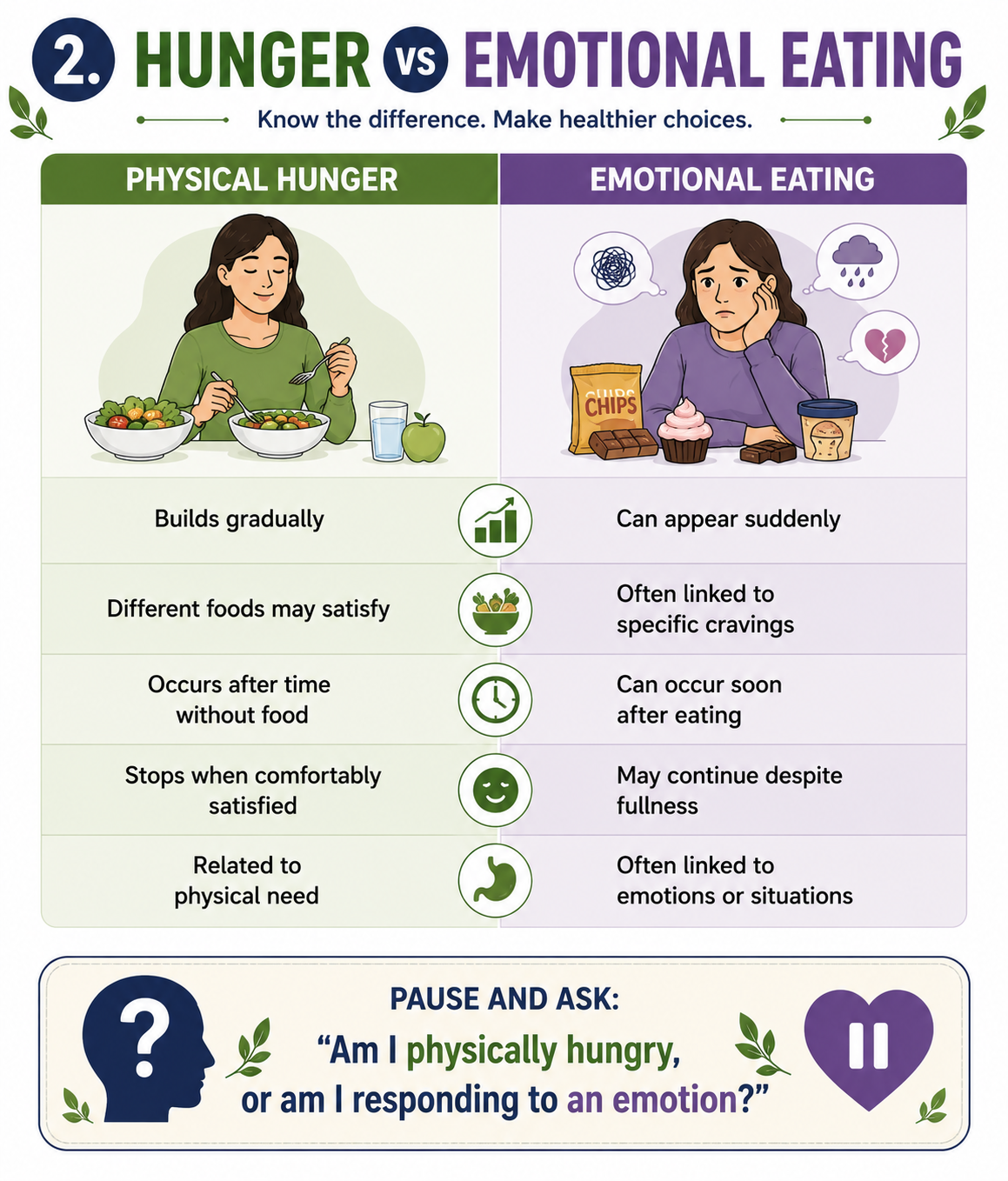
Not every urge to eat means you are physically hungry.
Sometimes the trigger is
- Boredom
- Stress
- Loneliness
- Habit
- Procrastination
- Seeing appealing food
- Wanting a break
Before eating, try a short pause.
Ask yourself:
Am I physically hungry?
When did I last eat?
What am I feeling right now?
Would I still want food if it were not directly in front of me?
There is no need to judge the answer.
If you are hungry, eat.
If you realize you are stressed or bored, you might first try another response, such as taking a short walk, calling someone, or stepping away from your workspace.
Cleveland Clinic recommends identifying emotional triggers and pausing before eating as part of a mindful approach.
5. Build Meals That Keep You Satisfied
Trying to control overeating by simply eating as little as possible can make eating patterns harder to maintain.
Instead, build meals that provide useful nutrition and satisfaction.
A balanced meal can include foods from different food groups, such as
- Vegetables or fruit
- A protein source
- Whole grains or another carbohydrate source
- Healthy sources of fat
NIDDK recommends having healthy foods and snacks available and emphasizes planning and balanced eating patterns as part of healthy weight management.
The goal is not to find one “magic” food that stops hunger.
It is to make meals satisfying enough that you are not constantly thinking about your next snack.
6. Avoid the Extreme Diet → Overeat Cycle
One overlooked problem is the cycle of restriction followed by overeating.
You may decide:
“Tomorrow I will eat almost nothing.”
You restrict heavily.
Hunger builds.
Cravings become stronger.
Eventually, you eat far more than planned.
Then guilt appears.
Then another restrictive plan begins.
This cycle can make eating feel increasingly difficult to manage.
Cleveland Clinic specifically cautions against restrictive fad diets and recommends a more mindful approach rather than ignoring hunger.
A healthier strategy is to build a sustainable eating pattern instead of repeatedly swinging between severe restriction and overeating.
7. Plan for Your High-Risk Eating Times
Most people do not overeat randomly.
There may be a pattern.
For example:
10 p.m. → work ends → television → snacks
Or:
3 p.m. → tired at work → vending machine → sweets
Or:
Weekend → social gathering → buffet → repeated servings
Instead of asking only:
“How do I stop eating?”
Ask:
“When does overeating usually happen for me?”
Create a simple trigger map:
| Situation | What Usually Happens | Better Preparation |
|---|---|---|
| Late-night work | Repeated snacking | Plan a proper evening meal and bedtime. |
| Stressful deadline | Eating at a desk | Take short movement breaks. |
| Television | Mindless snacking | Keep food away from the sofa. |
| Very long gap between meals | Large meal | Plan food earlier. |
| Social gathering | Repeated servings | Survey the choices before filling your plate. |
This is one of the most practical ways to turn awareness into action.
8. Change Your Food Environment
Your surroundings can influence your choices.
If snacks are constantly visible and easy to reach, they may become an automatic response to boredom or stress.
NIDDK recommends keeping healthier snacks available and avoiding keeping large amounts of foods high in fat, added sugar, or salt in places where they are easily accessible.
Make the healthier choice easier:
- Keep fruit visible.
- Store snack foods out of immediate sight.
- Buy portions that are easier to manage.
- Keep prepared nutritious foods available.
- Avoid eating directly from large packages.
This is not about banning favorite foods.
It is about designing your surroundings so that every decision does not require willpower.
9. Protect Your Sleep and Daily Routine
Sleep and eating habits are connected.
When your schedule becomes irregular, eating patterns can become irregular too.
Late nights may create more opportunities for snacking, while tiredness can make it harder to make deliberate food choices.
Cleveland Clinic recommends maintaining a consistent routine, including regular eating times, physical activity, stress management, hydration, and adequate sleep as part of managing overeating.
Keep your routine simple:
- Maintain a reasonably consistent sleep schedule.
- Avoid unnecessary late-night eating.
- Give yourself time to wind down.
- Keep regular meal patterns where practical.
- Include physical activity during the day.
You do not need a perfect schedule.
You need one that you can repeat.
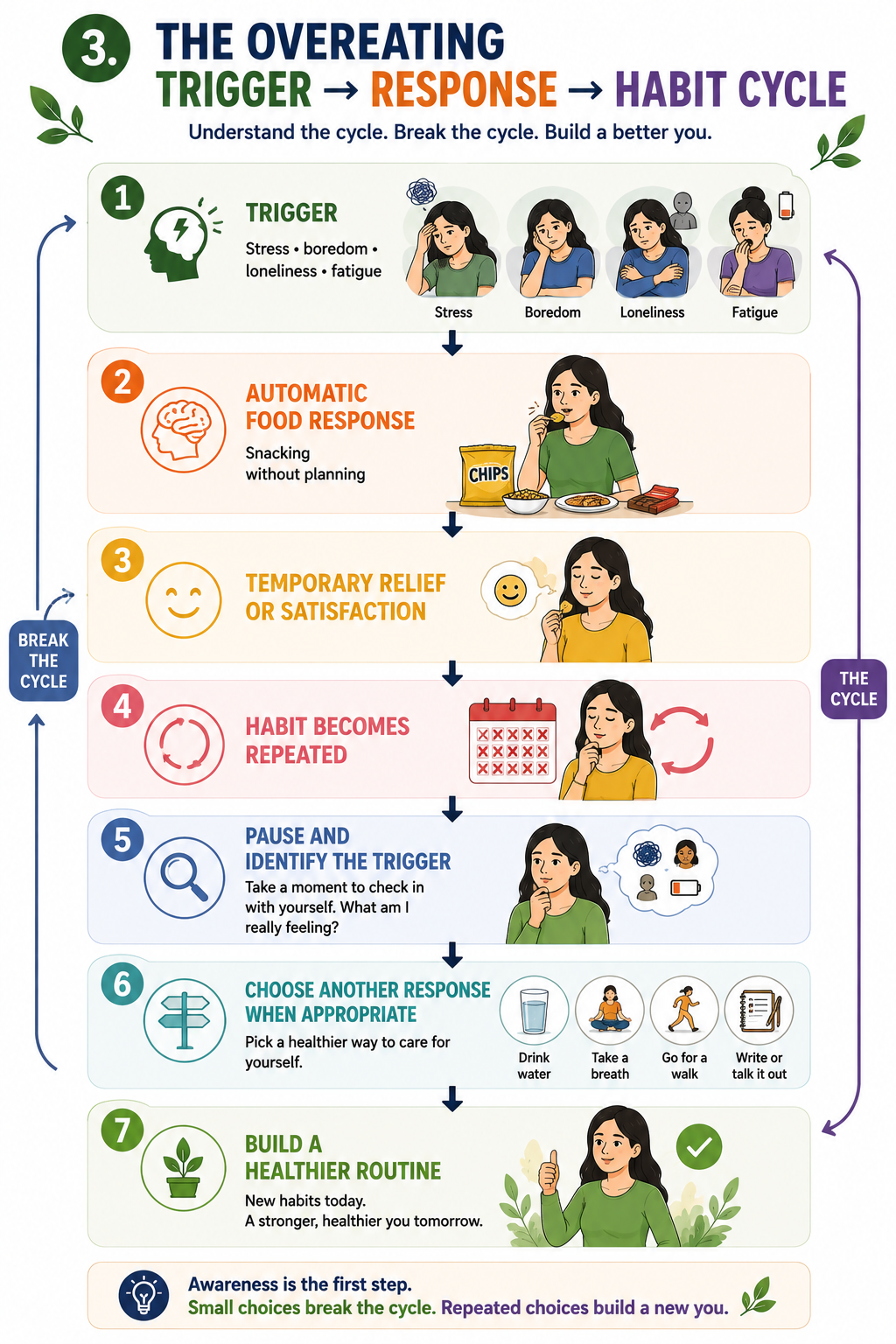
10. Replace the Trigger, Not Just the Food
This may be the most useful idea in the entire article.
Sometimes food is filling a role that has nothing to do with hunger.
Food may provide:
A break.
Comfort.
Entertainment.
Connection.
Relief from stress.
If you simply remove the food without replacing that function, the habit may return.
Try matching the response to the trigger:
| Trigger | Alternative Response |
|---|---|
| Boredom | Take a short walk. |
| Stress | Breathing or relaxation break |
| Loneliness | Call someone. |
| Work fatigue | Step away from the screen. |
| Procrastination | Take a short planned break. |
| Habitual TV snacking | Drink water or tea and change the routine. |
This does not mean you should never eat for pleasure.
Food can be enjoyable.
The point is to recognize when food has become the automatic solution to a non-food problem.
The 30-Second Pause
Here is a simple tool you can use anywhere.
Before taking another serving or reaching for an unplanned snack, pause for 30 seconds.
Ask:
1. Am I hungry?
2. What am I feeling?
3. How much food do I actually want?
4. Can I eat it sitting down without a distraction?
5. Will I still want it after this short pause?
Then make your decision.
There is no punishment if you decide to eat.
The purpose is to create awareness between the trigger and the action.
A Practical Daily Routine for Better Eating Awareness
You do not need a complicated meal plan.
Morning
Eat according to your hunger and usual routine.
Lunch
Sit down and eat without a screen if possible.
Afternoon
Notice whether you are hungry, tired, stressed, or simply looking for a break.
Dinner
Serve your food rather than eating directly from containers.
Evening
Identify whether late-night eating is caused by hunger, habit, boredom, or stress.
Before Bed
Follow a consistent sleep routine.
This approach focuses on awareness rather than restriction.
What to Do After You Overeat
Everyone overeats occasionally.
The worst response is often to punish yourself by starving the next day or beginning an extreme diet.
Instead:
- Return to your normal eating routine.
- Drink fluids according to your needs.
- Take a gentle walk if you feel comfortable.
- Avoid guilt and self-criticism.
- Think about what triggered the episode.
- Use that information to adjust your routine.
Cleveland Clinic specifically advises against drastically reducing food intake the following day after overeating.
One meal does not define your overall eating pattern.
When Overeating May Need Professional Support
Occasional overeating is common.
However, there is an important difference between occasionally eating too much and repeatedly experiencing a loss of control around food.
Consider speaking with a qualified healthcare professional if you:
- Frequently feel unable to control your eating
- Experience significant distress about eating
- Regularly eat unusually large amounts in a short period
- Feel intense shame or guilt around food
- Use extreme restriction to compensate for eating
- Find that eating problems are interfering with everyday life
Cleveland Clinic notes that overeating is not the same as Eating too much disorder, which involves a different pattern that can include loss of control.
Professional support can help identify the underlying issue and provide an appropriate treatment approach.
A Simple Overeating Self-Check
Instead of counting every calorie, try tracking patterns for a few days.
| Question | Your Observation |
|---|---|
| When did I eat? | |
| Where was I? | |
| How hungry was I? | |
| What was I feeling? | |
| Was I distracted? | |
| How much did I serve? | |
| How did I feel afterward? |
NIDDK recommends tracking factors such as what, when, where, why, and how much you eat because this can reveal patterns and triggers.
You do not need to track forever.
Use it as a temporary tool for learning about your own habits.
My Honest Take on Overeating
I do not think the answer is to fear food.
Strict rules can make eating feel like a constant battle.
A more useful approach is to understand your patterns.
Eat slowly.
Notice hunger.
Reduce distractions.
Plan ahead.
Build satisfying meals.
Protect your sleep.
Understand emotional triggers.
And make your environment work for you.
The goal is not to become perfect.
The goal is to become more aware of why, when, and how you eat.
Frequently Asked Questions
1. How can I stop overeating?
How to stop overeating depends on the reason it happens. Eating slowly, reducing distractions, paying attention to hunger and fullness, planning meals, managing emotional triggers, and creating a supportive food environment can all be useful strategies.
2. Why do I keep eating when I am already full?
Eating beyond fullness can happen because of fast eating, large portions, distractions, emotional triggers, highly appealing foods, social situations, or established habits.
3. How can I stop eating too much at night?
Look for the reason behind the late-night eating. If you are genuinely hungry, consider whether your daytime meals are adequate. If boredom, stress, screens, or habit are involved, changing the evening routine may help.
4. Does eating slowly help with portion control?
Eating slowly can give your body more time to recognize fullness. NIDDK recommends eating slowly and focusing on the food rather than eating while distracted.
5. Can emotional eating cause overeating?
Yes. Emotional states such as stress, boredom, sadness, or other feelings can contribute to eating when you are not physically hungry. Recognizing the trigger is an important first step.
6. Are smaller plates useful for managing portions?
Smaller dishes can make portions appear more substantial and may help some people manage serving sizes. They are one practical strategy, not a requirement.
7. Should I skip my next meal after overeating?
Usually, there is no need to punish yourself by drastically restricting food afterward. Returning to your normal eating routine is generally more practical than creating another cycle of severe hunger and overeating.
Key Takeaways
- Overeating is not always caused by physical hunger.
- Eating slowly can improve awareness of fullness.
- Avoiding screens during meals can reduce distracted eating.
- Serve food onto a plate instead of eating directly from packages.
- Identify emotional and environmental triggers.
- Build satisfying, balanced meals rather than relying on severe restriction.
- Plan for the times when you are most likely to overeat.
- Make healthier choices easier to access.
- Maintain a consistent sleep and daily routine.
- Treat occasional overeating as information, not failure.
Author Note
This article was written by RVLNSV PRASAD to provide practical, evidence-informed information about overeating and eating habits. Personal experiences are included only as examples and should not be interpreted as scientific evidence or guarantees of individual results.
Medical Disclaimer
This article is for general educational purposes and is not a substitute for medical advice, diagnosis, or treatment. Eating patterns can be affected by medical conditions, medications, mental health, and eating disorders. If you frequently experience loss of control around food, significant distress, or persistent problems with eating, speak with a qualified healthcare professional.
Related Articles
- 4 Week Diet Plan for Weight Loss
- A Holistic Guide to Healthy Lose Weight
- Healthy Eating Meal Plan for Wellness
- Best Weight Loss Nutrition
- 6 Tips To How To Maintain A Healthy Weight ?
- Weight los
- 12 Tips for A Healthy Lifestyle










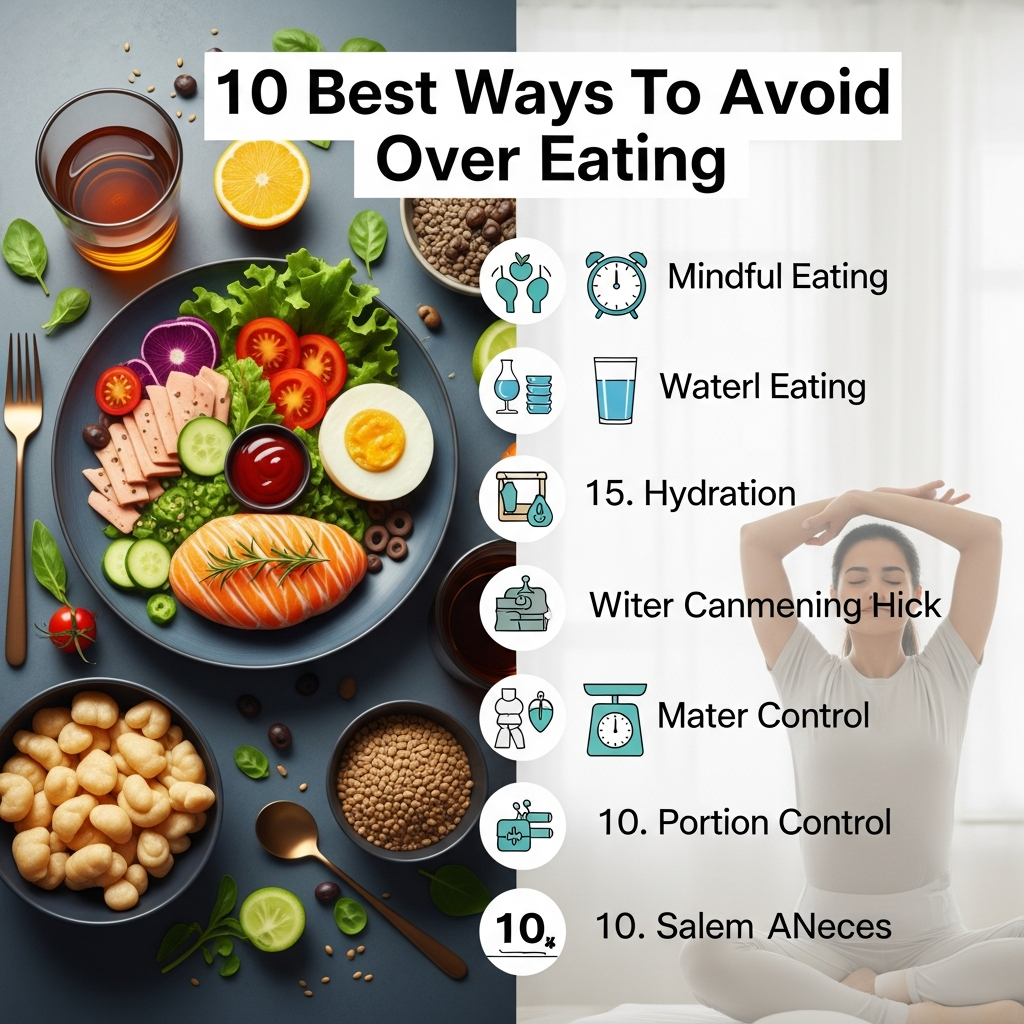
[…] 10 Best Ways To Avoid Over Eating […]